| https://www.facebook.com/groups/410323596443222/ | |||||||
|
|||||||

Visitas: 14


| https://www.facebook.com/groups/410323596443222/ | |||||||
|
|||||||
Visitas: 14
Publicado: Marin-Garcia, J. (2018). What are the research focuses regarding learning in the field of operations management in higher education? The case of Spain in 2017. Journal of Industrial Engineering and Management, 11(4), 607-616. doi:http://dx.doi.org/10.3926/jiem.2550
Purpose: What are the current research topics being studied by higher education professors in the area of operations management in Spain with regard to the learning of their students? Are the approaches that support these investigations adequate?
Design/methodology/approach: For the analysis, we have selected 25 publications in peer-reviewed scientific journals published by Spanish authors in 2017, and we have encoded them using Atlas.ti.
Findings: Most of the research centers on a very basic type of approach to learning, which reproduces the type of research typically conducted more than 40 years ago (type 1). For this reason, we propose an example of how to convert type 1 research questions into type 2 or 3 questions.
Originality/value: This paper collects and summarizes the main works on learning research carried out by members of ACEDEDOT and published in 2017, identifying themes, methods, levels of teacher conception and focus on the type of student learning. We intend to use this information to create a map of the current situation and propose possible suggestions to implement evidence-based instruction on operations management.
Visitas: 23
Visitas: 16
Nuevo artículo publicado que me ha permitido colaborar con estupendos investigadores del área de la salud para seguir avanzando en instrumentos que nos permitan hacer mejor ciencia y, sobre todo, informarla mejor. Algo que me interesa doblemente como editor de WPOM y de JIEM. Por otra parte, sufrir los estándares de publicación de una Q1 en el área de CC de la salud también es una experiencia interesante.
Visitas: 19
Con frecuencia recibo consultas acerca de mi opinión sobre la calidad de diferentes revisas. Supongo que me han preguntado porque consideran que soy una persona experta porque he invertido varios años como subdirector de investigación del Departamento de Organización de Empresas en diferentes equipos. O quizás sea por el seguimiento y apoyo que he dado a la comisión de Indice de Actividad Investigadora de la UPV a través de una cantidad bastante elevada de “gregales” (sistema de gestión de incidencias, quejas y sugerencias internas en la UPV) emitidos a lo largo de los últimos 10-12 años. También es posible que me pregunten por mi experiencia con todo el sistema de indexación ya que soy editor jefe o participo en el comité editorial de varias revisas “indexadas”.
La última tanda de preguntas recibidas tenía que ver sobre si se podía considerar como “indexada” determinada revista. Interesante cuestión que me ha animado a escribir esta entrada.
Primero quiero insistir en un asunto de terminología: no se debería hablar de revistas indexadas o no indexadas… indexadas hay miles (es tremendamente sencillo estar indexada en algún sitio, es decir estar dada de alta en una base de datos de revistas científicas). Indexadas con indices relativos hay menos (muchas menos).
Indices relativos tienes en JCR, ScimagoJCR, pero también en Journal Scholar Metrics, google citations, DICE, MIAR, ICV de Copernicus … la dificultad está en definir cuáles de los indices relativos son fiables y dónde están los puntos de corte para marcar revistas de prestigio si el índice no crea bloques o cuartiles. Por ejemplo, Scimago JCR además del índice, agrupa la revistas en cuartiles; DICE tiene las revisas agrupadas en 4 niveles de mas a menos calidad; pero MIAR o ICV-Copérnicus solo ponen un numero (cuanto más grande mejor, pero no sabes los puntos de corte por niveles).
A estos índices se pueden añadir aquellos desarrollos locales (nacionales, autonómicos, de una universidad o de una asociación científica) que se hayan creado con un fin específico. Por ejemplo, las universidades australianas han pactado un indice que les sirve de referencia; las universidades catalanas usan MIAR como referencia; la universidad de Cambridge tiene un listado agrupado en 4 niveles (como hace el DICE) que indica cuáles son las revistas de más a menos prestigio; o, por poner un último ejemplo, la UPV tiene una clasificación de revistas en 4 niveles (ahora están modificándolo para que sean 6), creada por la comisión del Valoración de la Actividad Investigadora de la UPV (que entra dentro del programa DOCENTIA, integra todos los campos científicos en la que la UPV se mueve y lo hace con el espíritu de que sea JUSTA la comparación inter-disciplinas. Además, tiene un sistema de decisión auditado, sensato y establecido durante años). Por supuesto, ninguno de estos ejemplos es perfecto (no sólo porque es difícil tener claro el criterio que hace que una revisa científica sea de calidad o no) pero representan soluciones de compromiso alcanzadas a través de un consenso y que permiten tener un sistema más ajustado y acorde a las necesidades concretas de una institución.
Personalmente creo que, además de JCR y Scimago JCR, hay algunos otros indices solventes (Journal Scholar Metrics , google citations, DICE, MIAR, ICV de Copernicus…). Quizás, los más claros para el campo de la Organización de Empresas en España serían:
Para finalizar, quería expresar una preocupación que me ha empezado a rondar por la cabeza. Me temo que pronto se disparará el negocio de crear indexadores. Hasta ahora, los índices de revistas que se valoran en España están en manos de grandes grupos editoriales multinacionales (Thompson, Elsevier y quizá Google se puede incluir en este paquete). Nos hemos fiado de sus “rankings” porque son unas empresas monstruo que han intentado (y casi conseguido) tener el monopolio de este servicio. Pero, en el fondo, son entidades que velan por sus propios intereses y la ciencia es una escusa para hacer su negocio (que, en algunos casos, no es demasiado transparente). También hay índices que han sido desarrollados por colectivos científicos independientes apoyados con fondos públicos nacionales aunque, paradógicamente, no son considerados por las propias instituciones que los financian, que prefieren dar prioridad a los listados de JCR o ScimagoJCR (también es cierto que España está financiando el desarrollo de JCR y scimagoJCR a través de la suscripción de la FECYT de SCOPUS y WEBofScience para todas las universidades públicas españolas).
En este contexto no resulta imposible imaginar (y esto es lo que me preocupa) que los mismos estafadores que inventan los predatory journals y los predatory meeting, ahora extiendan su fraude orientándolo a los predatory indexes (porque seguro que hay un negocio en ordenar revistas y habrá gente está dispuesta a pagar una fortuna para que sus revistas estén en la parte TOP de algún indice -independientemente de las garantías científicas del indice-) y ese es un peligro al que tendremos que enfrentarnos en el futuro.
Visitas: 120

http://euramonline.org/annual-conference-2017.html
Competency Development in Business Management: Improvement through Higher Education” is an Innovation SIG Track at the EURAM 2017 conference in Glasgow, Scotland, June 21-24. The track is organized by: Sara Urionabarrenetxea (University of the Basque Country), Juan Marin (Universitat Politècnica de València), Dolores Marquez (Universitat Autònoma de Barcelona), Javier Paricio (University of Zaragoza), Massimo Bianchi (Bologna University), Chris Cowton (University of Huddersfield) and Carlos Fong (University of Guadalajara). We would like to encourage you to submit a paper for next year’s event and visit Glasgow in Scotland. Deadline for submission of papers is 10 January, 2017 2:00 pm GMT +1 (Belgian time) (The EURAM 2017 website Submission Portal will open for online submissions on November 3, 2016).
SIG 06: Innovation (INNO)
T 06_ 10 Competency Development in Business Management
Companies today are part of more complex and dynamic environments than ever, and this calls for new competencies for managers. Higher education must deal with this challenge, ensuring that students acquire appropriate competencies and that are trained in order to be able to continue learning throughout their lives (lifelong learning). There are certain crucial knowledge, skill, and ability (KSA) competencies: capacity for innovation, leadership, entrepreneurship, teamwork, conflict management and, above all, the ability to acquire and generate knowledge.
The purpose of the track is to analyze avenues for the development in higher education of skills related to business management.
Sara Urionabarrenetxea, Ph.D.
University of the Basque Country, Spain
sara.urionabarrenetxea@ehu.eus
Juan Marin, Ph.D.
Universitat Politècnica de València, Spain
jamarin@omp.upv.es
Dolores Marquez, Ph.D.
Universitat Autònoma de Barcelona, Spain
MariaDolores.Marquez@uab.cat
Javier Paricio, Ph.D.
University of Zaragoza, Spain
jparicio@unizar.es
Massimo Bianchi, Ph.D. and Laura Tampieri, Ph.D.
Bologna University, Italy
massimo.bianchi@unibo.it; laura.tampieri@unibo.it
Chris Cowton, Ph.D.
University of Huddersfield, UK
c.j.cowton@hud.ac.uk
Carlos Fong, Ph.D.
University of Guadalajara, Mexico
cfong@cucea.udg.mx
We look forward to meeting you in Glasgow.
Authors Guidelines and Submission Deadline:
As an author, it is crucial to follow the guidelines and formatting instructions to prepare and submit your paper in order to have it published in proceedings.
ONE PRESENTING AUTHOR PER PAPER SUBMISSION
Each individual is limited to one personal appearance on the programme as a presenting author. This policy precludes acceptance of papers for more than one presentation. In other words, an author can submit and present only one paper. However, a presenter can always be a non-presenting co-author on additional papers.
Please read the instructions carefully prior to submitting:
1. Each paper can only be submitted to ONE track.
2. Submitted papers must NOT have been previously published and if under review,
must NOT appear in print before EURAM 2017 Conference.
3. To facilitate the blind review process, remove ALL authors identifying information,
including acknowledgements from the text, and document/file properties. (Any
submissions with author information will be automatically DELETED; author
information and acknowledgements are to be included in a SEPARATE document).
4. The entire paper (title page, abstract, main text, figures, tables, references, etc.) must
be in ONE document created in PDF format.
5. The maximum length of the paper is 40 pages (including ALL tables, appendices and
references). The paper format should follow the European Management Review Style
Guide.
6. Use Times New Roman 12-pitch font, double spaced, and 1-inch (2.5 cm) margin all
around.
7. Number all of the pages of the paper.
8. No changes in the paper title, abstract, authorship, track and actual paper can occur
AFTER the submission deadline.
9. Check that the PDF File of your paper prints correctly and ensure that the file is virusfree.
Submissions will be done on-line on the EURAM 2017 website (open as of 1
December 2016: see http://www.euram-online.org/annual-conference-2017.html.)
10. Only submissions in English shall be accepted for review.
11. In case of acceptance, the author or one of the co-authors should be available to
present the paper at the conference. A presenting author can only present one paper at
the conference.
Visitas: 15
Marin-Garcia, J., Andreu Andres, M., Atares-Huerta, L., Aznar-Mas, L., Garcia-Carbonell, A., González-Ladrón-de-Gevara, F., Montero Fleta, B., Perez-Peñalver, M., & Watts, F. (2016). Proposal of a Framework for Innovation Competencies Development and Assessment (FINCODA). WPOM-Working Papers on Operations Management, 7(2), 119-126. doi:http://dx.doi.org/10.4995/wpom.v7i2.6472
In this article we propose an innovation competence model of the people which is based on the existing literature to integrate and complement existing models. The main contribution of this work consists in demonstrating the differences and similarities of current models and in providing a conceptual definition for each model element. In this way, both researchers and people in charge of human resources in companies obtain a framework with which to design measuring instruments to assess innovation competence, which can fulfill the twofold demand of validity and reliability.
This work has been conducted as part of a European project financed by the European Union [“FINCODA” Project 554493-EPP-1-2014-1-FI-EPPKA2-KA] (http://bit.ly/FINCODA-EUsite01). (The European Commission support for the production of this publication does not constitute an endorsement of the contents which reflects the views only of the authors, and the Commission cannot be held responsible for any use which may be made of the information contained therein); and by the Universitat Politénica de Valencia PIME/2015/A/009/A “Evaluation of innovative behavior indicators in university students”.

Visitas: 29
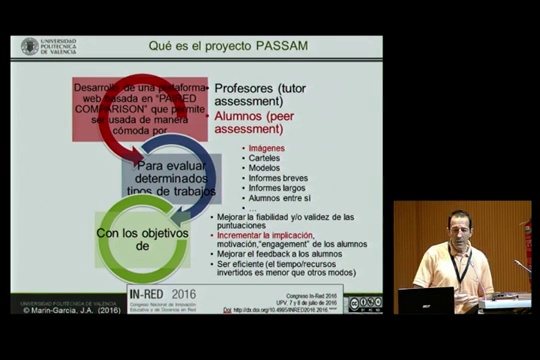
PASSAM: Peer ASSessment And Monitoring system
Juan A. Marín-García / José P. García-Sabater / Joan Morant-Llorca / J. Alberto Conejero Casares
(Universitat Politècnica de València)
https://media.upv.es/player/?id=a604aef0-4f33-11e6-9eff-b5d24d1eee47&autoplay=true
Visitas: 17
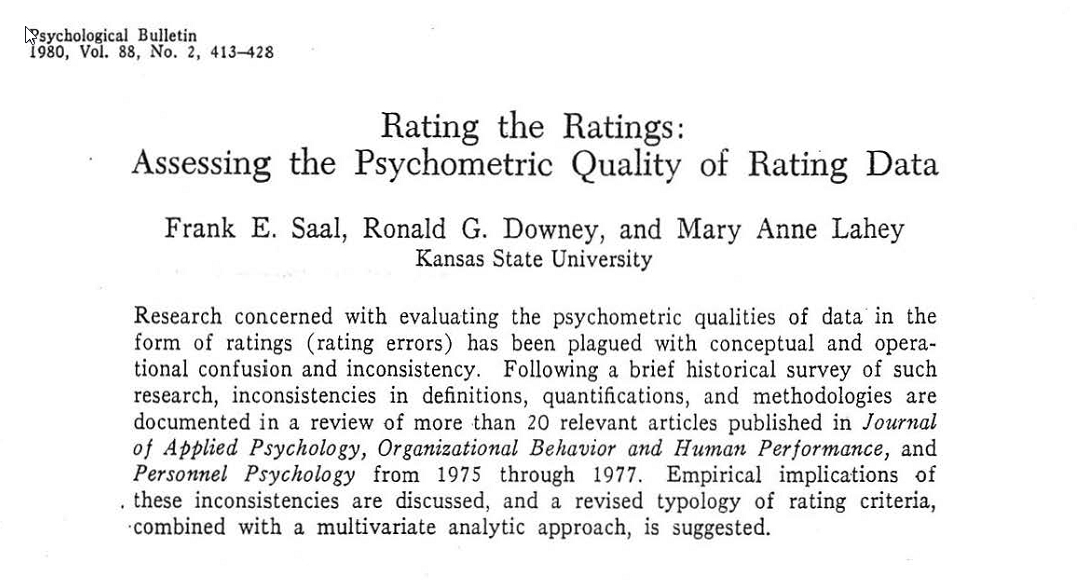
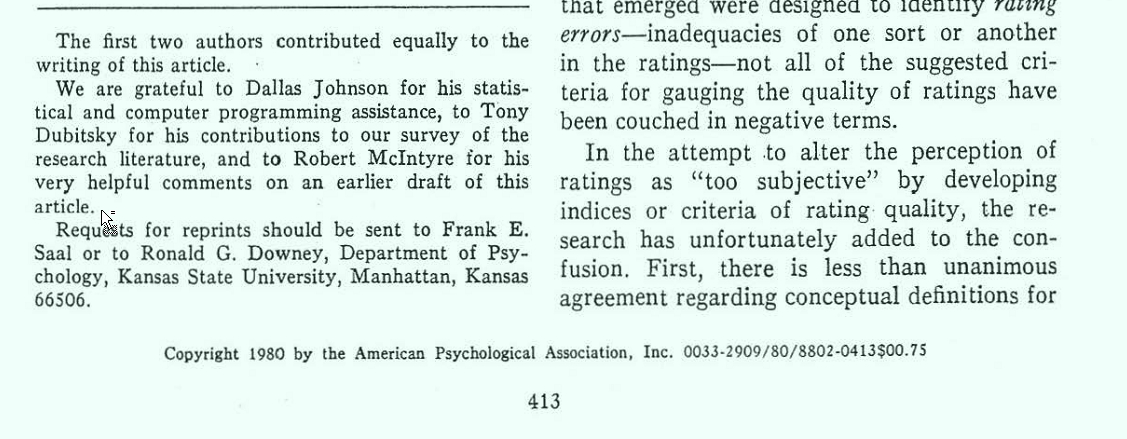
Here you can see a good example of how to follow The San Francisco Declaration on Research Assessment (DORA), in particular for this point:
In this article:
And this information was added:
Guardar
Guardar
Guardar
Visitas: 15
Lena Gumaelius, Monica Almqvist, Anna Árnadóttir, Anders Axelsson, J. Alberto Conejero, José P. García-Sabater, Lene Klitgaard, Cecilia Kozma, Julien Maheut, Juan Marin-Garcia, Henrik Mickos, Per-Olof Nilsson, Agneta Norén, Margarida Pinho-Lopes, Manfred Prenzel, Johanna Ray, Torgny Roxå, Mirjam Voss
European Journal of Engineering Education
pp. 1-34 | DOI: 10.1080/03043797.2015.1121468
Visitas: 22
